
Back to Resources
Resources
Intermediation is not overhead
No items found.
No items found.
We are at a moment within the women’s rights movement where major funding streams have been disrupted. And, as is often the case when funding is abruptly withdrawn, innovative finance has reappeared as a prospective solution. This makes sense. However, the conversation tends to circle around the binary absence or presence of funding, rather than seeing it as one part of a broader economic system.
For nearly 25 years, Criterion has been working at the intersection of finance and social movements. It’s an awkward intersection. People name the mission they’re moving forward, and how they need more funding than ever seems to be available to achieve it. And yet, they shy away from actually talking about financial structures, which they see as a distraction or even a corruption of the core mission. It’s as though the farther they are away from money, the closer to purpose.
We believe nothing could be further from the truth. First and foremost this is because movements already operate within economies, whether they want to or not. They’re organizations with business models that sustain their activities. They engage in economic relationships facilitated by financial systems. And neglecting these relationships means they can go quite wrong.
What’s needed is a different way of understanding how movements relate to economies, and how capital moves within those relationships. The reframes below give us a way to move from understanding the system to actively shaping it, building the intermediation and infrastructure needed for more lasting, aligned flows of capital.

Economies aren’t abstract systems ‘out there.’ They are built through relationships, starting with households, extending through systems of care, labor, and exchange, and unfolding over time. Movements already participate in, resist, and reshape economic relationships, and as they do so they shape who has decision-making power, on what terms.
We touched on this above; this reframe is an important place to start because if we can’t see the economy the movement operates within, we can’t design the infrastructure needed to finance it.

Organizations participate in economic systems. They hold assets and liabilities, organize resources and labor, and bear risk over time.This economic life shapes the conditions within which mission can happen: what resources are available, how decisions get made, and what risks can be taken.
Within that, organizations tend to focus on revenue (“we need funding”) as if that’s where power sits. But revenue flows in and out of organizations. Steady assets such as intellectual property, relationships, and reputation are lend them agency over time.
Recognizing this is the next step in designing financing, intermediation, and infrastructure that align with purpose.

A transaction shows that money moved from one place to another, but it doesn’t capture the relationship the funding sits within.
That relationship is shaped by terms such as who sets the conditions, how risk is shared, and what accountability looks like over time. Those terms are where power sits.
An organization can spend years fundraising to secure a grant or an investment. But what they’ve actually built is an economic relationship that will continue to shape decisions, expectations, and possibilities long after the transaction has happened.
Shifting how capital works, then, is not just about increasing the amount that moves. It’s about understanding and shaping the relationships and the terms through which it moves.
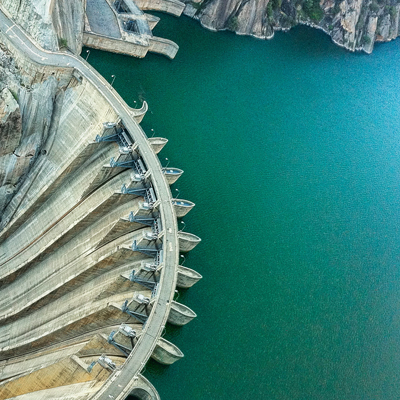
If economic relationships shape how capital works, how are those relationships structured and maintained?
That’s the role of intermediation. Intermediaries don't just move money from one place to another, they structure relationships. They determine who is included, on what terms, and with what level of agency.
Intermediation can involve channeling capital, pooling risk, or translating knowledge so that different actors can participate. It makes it possible for relationships to function across multiple contexts and constraints where direct relationships alone would not hold.
But intermediation is often treated as expensive overhead that takes away from “the real work.” As the place where relationship terms a reset and negotiated, intermediation is part of the real work.
If we want to shift how capital moves, we must attend to howintermediation is designed, resourced, and governed.
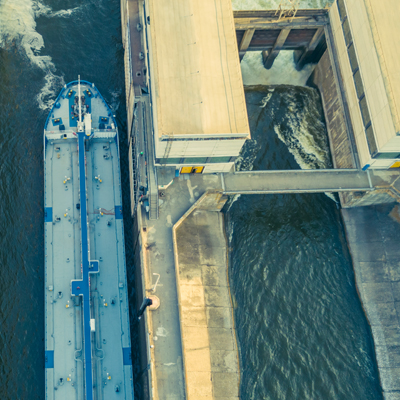
If intermediation is what structures relationships and the terms of those relationships, those same terms are carried through in how capital is designed and deployed.
How capital moves tell us whether it is appropriate or aligned with the needs of organizations. Different financial vehicles such as grants or debt shape relationships. They define expectations, distribute risk, and set conditions for how organizations can act over time.
When the design of those vehicles isn’t aligned, more capital can actually reinforce unequal power dynamics in the relationships organizations are trying to build.

Intermediation happens through processes inside an organization. These processes have costs and drive revenue, and therefore a business model. When we insist intermediation should be done“on the cheap,” we undermine the very capacity that would give us power in complex transactions.
We were in a conversation recently where someone said they wanted a “direct relationship” deal. Those don’t exist. Some interactions may look direct because of the privilege in which that relationship operates.Behind the scenes are lawyers, accountants, and more intermediation making that transaction look easy.
What this shows is that power is not only held in relationships, but embedded in the processes that structure them. Changing those processes is what allows those relationships to shift. This is where the work of redesign begins before it can be extended and sustained through broader infrastructure.

Financial infrastructure is the set of systems, rules, and shared structures that make relationships reliable. It creates consistency and supports stability in how capital flows. The relationships intermediaries manage don’t exist in isolation. They are connected within a broader infrastructure which builds collaboration and transparency.
Without it, relationships remain one-off and fragile. Trust is harder to build, and capital struggles to move beyond individual transactions. Building infrastructure is therefore what allows relationships (and the capital that moves through them) to last. Capital moves at the speed of trust, and infrastructure is what makes that trust possible.
The work ahead, then, is not simply to access funding. It isto design the intermediation and infrastructure that shape those relationships so that capital can move in ways that are aligned, stable, and lasting.
Our work depends on an ever-expanding community of team members, advisors, donors, and other partners who help us achieve our mission.
